
The 9 Very Best Yoga Mats
Photo: Marcus McDonald
Whether you’re returning to your local yoga studio after a long hiatus or have gotten into the habit of practicing at home with a virtual class, you’ll need a reliable mat on hand. Too slippery and your downward dogs will feel hazardous, too grippy and you might find your mat coming with you when you jump forward during sun salutations. To help us find the Goldilocksian ideal of yoga mats — along with some specific options for those in search of, say, a cushiony mat that’s especially supportive to joints or one that’s especially lightweight — we reached out to 15 yogis, studio owners, and fitness experts to hear about their favorites. If you’re looking for a mat to use for any exercises involving weights, or you just generally need a bigger mat, check out our guide to gym mats. But if you’re shopping for a yoga mat specifically, check out our table of contents above to jump right to the type of mat you’re looking for, or read on to learn more about how to pick the best one for you.
What
we’re
looking
for
Dimensions
Most yoga mats are 24 inches wide and between 68 and 72 inches long. If you get a mat in this range it should fit neatly in the rows in your studio. If you’re tall, it might be worth looking for a mat on the higher end of this range, or even above it, to make sure you have enough space. Wider mats give you a little more room from side to side, but just be aware that some yoga studios discourage these mats because they can alter the number of people who can fit in each row of the classroom. A few mats on our list come in different sizes, which we’ve indicated for each one below. (All measurements below are listed in the order of length by width.)
Thickness
Yoga mats range from pancake thin to extra thick and cushy. Thinner mats give you more ground contact, which some yogis like feeling underneath their feet (especially in standing poses when you want a firm foundation). Thicker ones tend to feel more plush and supportive. If you have any sensitivities in your joints or your back, you may prefer the softness of a thicker mat.
Weight
The weight of your mat might not matter much if you’re practicing at home, but if you’re lugging it back and forth from the yoga studio in your bag or on your back, you’ll feel the difference a few ounces make. Thicker mats tend to weigh more, so keep that in mind when balancing your needs for cushioning versus portability.
Material
Most yoga mats are made from either rubber, cork, or polyvinyl chloride (PVC), a synthetic plastic polymer. Rubber mats are more sustainable as they’re made from naturally sourced and biodegradable material, but they may be irritating if you’re allergic to latex (latex proteins are found in rubber). PVC tends to be lighter and less expensive. Rubber is grippier, while PVC is smoother and can feel more slippery. Cork mats are sustainable, too, because they’re made from tree bark that is harvested without deforestation. Cork mat surfaces are smooth and soft to the touch, and since cork is hydrophobic, it doesn’t get slippery when wet. They also are easy to clean since cork is naturally antimicrobial.
Best overall yoga mat
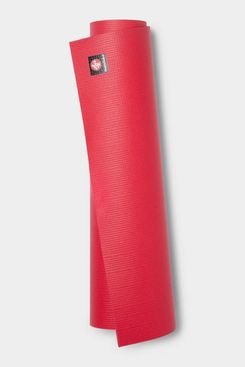
Manduka PROlite Yoga Mat
From
$86
now 20% off
From
$86
Dimensions: Standard: 71” x 24”, Long: 79” x 24” | Thickness: 4.7 mm | Weight: Standard: 4 lbs, Long: 4.5 lbs | Material: PVC
Three of the yogis we talked to named Manduka’s PROlite mat as their go-to for daily practice. “My favorite gear to practice with is all Manduka,” says instructor Kyle Miller. “The Manduka mat is indulgent — it’s grippy, soft, and breaks in very well.” And while the mat certainly isn’t the least expensive of the ones on this list, Miller told us it holds up well over time. “You definitely get what you pay for with their mats,” she says. Kristen Nichols, an instructor at Y7 Studio, agrees that Manduka is a “quality brand” and that its lightweight mats are “durable.” She also notes that the mat “can get slippery, but it’s meant to — it’s designed to make you engage more.” Alexandria Brzenk, a private yoga instructor, is a fan of Manduka’s PROlite mat as well and says she uses it both for home practice and for teaching at her studio. The slight slipperiness is part of the appeal: “I prefer the texture of this mat over rubber mats because it makes flowing through transitions smoother while also offering enough traction so that my hands don’t slip in down dog,” she says. According to Brzenk, the mat also offers comfortable, full-body support: “It provides cushioning for the joints without sacrificing stability in standing postures.” And if you’re carrying it to the studio, Nichols notes this one is easy to take on the go. Manduka says it hasn’t made any design updates to its PROlite mats, though some new colors will appear as “new” on brand’s site.
From
$86
at Amazon
From
$99
at REI
Best (less-expensive) overall yoga mat
Best extra-grippy yoga mat
Best less-expensive extra-grippy yoga mat
Best lightweight yoga mat
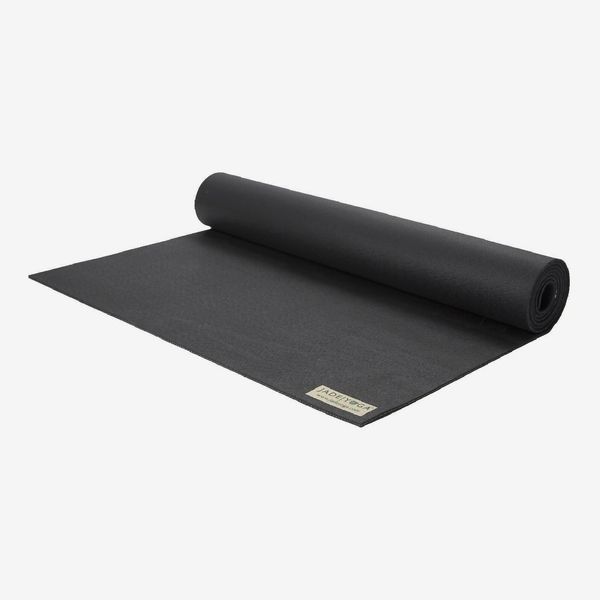
Jade Travel Yoga Mat
From
$65
Length: Available in two: 68” x 24” and 74” x 24” | Thickness: 3 mm | Weight: 3.5 lbs | Material: Rubber
Sharron Lynn, founder of the wellness community Breathe Flow Be, also recommends Jade’s rubber mats, and she’s particularly fond of its travel mat, which can be used even if you’re not on the go. She calls the mat “lightweight” (it’s just over three pounds), “easy to clean,” and great for practicing both “outdoors and indoors.” Best of all, she says, is that it has the same nonstick textured rubber surface as the Jade Harmony mat above, so it’s also very grippy. She heard about the mat from a fellow yogi who thought it would give her better traction in practice. “I was taking a ton of hot-yoga classes and had issues with my hands slipping due to sweat and moisture from the heated room. She recommended Jade’s mats about three years ago, and I’ve been using them ever since.” This travel style is one of the thinnest mats on our list so it’s not the one to choose if you like a lot of support. It will give you the sensation of stability in standing poses, though, and its thinness keeps the weight very low, so it’s easy to tote around.
From
$65
at Amazon
$75
at REI
Best double-sided yoga mat
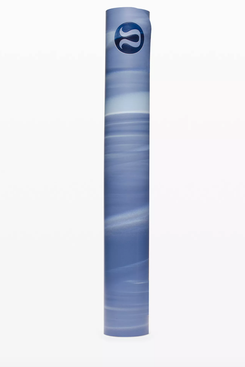
Lululemon The Reversible Mat 3mm
From
$68
From
$68
Length: 71” x 26” | Thickness: 3 mm | Weight: 3.87 lbs | Material: Rubber and polyurethane
If you’re torn between the feel of textured rubber and smooth synthetic, yoga teacher Hannah Gardner recommends this reversible mat that’s basically two mats in one. One side is made from polyurethane (a plastic similar to PVC) while the other is lined with natural rubber for a softer, grippier feel. “I use the smooth side up during a Vinyasa flow, allowing easy transitions,” Gardner says and then for hot yoga, “having the grip side up keeps me from sliding around.” At three millimeters it’s a very thin mat (and almost as lightweight as the Jade Travel model) so it won’t provide a ton of cushioning. Outdoor-gear writer Joe Jackson likes the squishier five-millimeter version for doing body-weight exercises on his back deck (though he recommends even thicker mats for any workouts involving weights). At 26 inches wide, it gives you a hair more room to move side to side than a standard 24-inch mat.
From
$68
at Lululemon
Best cushioned yoga mat
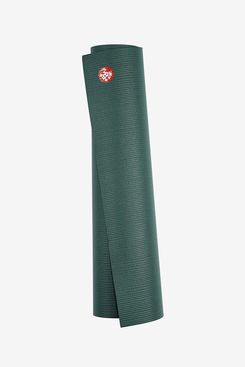
Manduka PRO Yoga Mat
From
$136
now 15% off
From
$136
Length: Standard: 71” x 26”, Extra Long: 85” x 26” | Thickness: 6 mm | Weight: Standard: 7.5 lbs, Extra Long: 9.5 lbs | Material: PVC
Our best overall yoga mat is actually the lighter version of this super-cushy mat. While the “lite” mat is a crowd pleaser with its middle-of-the-road thickness and commute-friendly weight, the PRO is for those seeking a truly plush feel. At six millimeters thick, it’s the most cushioned mat on our list, but at seven and a half to nine and a half pounds (depending on the length) it’s also the heaviest — so it’s maybe not the best pick if you’re carrying it from home, to work, to the studio, and back. Sarah Neufeld, co-founder of Modo Yoga, tells us that she “always uses Manduka mats” and that the PRO is her go-to for at-home practice. “When you get the PRO, at first it feels slippery, but then a couple of weeks into using it, it starts to get perfect,” she says. “Five to ten years later, it gets even better and stays grippy.” Neufeld notes that the Manduka PRO mat is “really heavy,” but that it gives “a lot of support.” Heather Lilleston and Katelin Sisson, the founders of Yoga for Bad People, agree: “For home practice, a bit more cushion and density are sometimes nice,” they told us. “For that, we love the Manduka PRO.” And though it’s a bit more expensive, Neufeld says it’s a worthy investment: “It’s thicker and will last forever, so I’m willing to spend more on it,” she says.
From
$136
at Amazon
$138
at Manduka
Best sustainable yoga mat
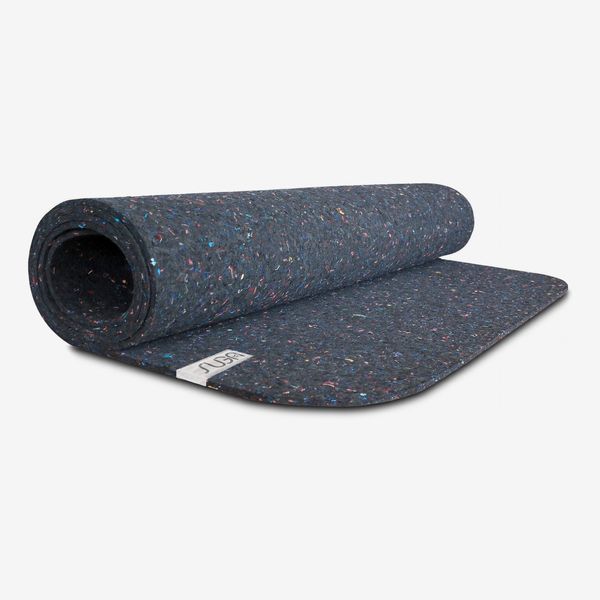
SugaMat Recycled Wetsuit Yoga Mat
$89
Length: Regular: 72” x 25,” Extra Large: 74” x 26” | Thickness: 5 mm | Weight: 5 lbs | Material: Recycled wetsuits
While several of the mats on this list come from brands with a focus on sustainability (Jade’s mats are made from ecofriendly natural rubber, and the brand plants a tree for every mat sold), SugaMat’s offerings take that commitment a bit further: Each mat is made entirely from recycled wetsuits. Miller told us the mats are a favorite at the Love Yoga studio in Los Angeles: “They’re comfy, very cool looking, and nonslip,” she says. SugaMats are a little longer and wider than most, too, if that’s something you’re looking for.
$89
at Amazon
From
$89
at SugaMat
Best cork yoga mat
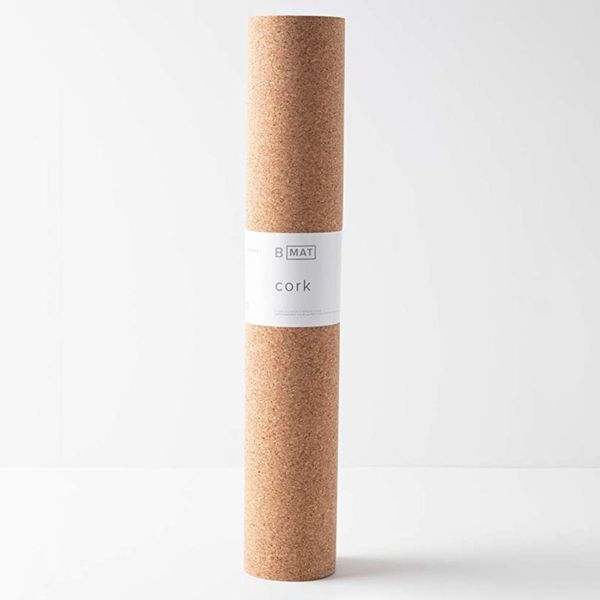
B Yoga Natural Non Slip Cork
$98
Length: 72” x 24” | Thickness: 4 mm | Weight: 5.1 lbs | Material: Cork (top), rubber (bottom)
Cork yoga mats are unique because they feel soft on the skin when they’re dry, but become grippy when wet. That combo makes it a great option for sweaty sessions, or for yoga enthusiasts who want a look that’s “distinctly non-engineered,” as writer Maggie Lange put it. In her review for the Cut, Lange says this B Yoga mat changed her summer workouts because of cork’s sweat-management capabilities. “Cork’s impermeability is often called hydrophobic: It resists liquid,” she writes. “I don’t know if it was absorbing sweat or wicking it to some unknown locations, but my workout surface was desiccated.”
$98
at Amazon
$98
at Amazon
Our experts
• Alexandria Brzenk, private yoga instructor
• Patrick Foley, manager and yoga instructor at Sky Ting
• Hannah Gardner, yoga instructor
• Joe Jackson, Outside magazine columnist and home-gym expert
• Krissy Jones, Sky Ting co-founder
• Chloe Kernaghan, Sky Ting co-founder
• Maggie Lange, writer
• Heather Lilleston, Yoga for Bad People co-founder
• Sharron Lynn, Breathe Flow Be founder
• Bethany Lyons, founder of Lyons Den Power Yoga
• Kyle Miller, yoga instructor
• Sarah Neufeld, Modo Yoga co-founder
• Kristen Nichols, yoga instructor at Y7 Studio
• Katelin Sisson, Yoga for Bad People co-founder
• Liz Wexler, yoga instructor and former group-fitness manager at Equinox
• Sarah Neufeld, Modo Yoga co-founder
• Kristen Nichols, yoga instructor at Y7 Studio
• Katelin Sisson, Yoga for Bad People co-founder
• Liz Wexler, yoga instructor and former group-fitness manager at Equinox
The Strategist is designed to surface the most useful, expert recommendations for things to buy across the vast e-commerce landscape. Some of our latest conquests include the best acne treatments, rolling luggage, pillows for side sleepers, natural anxiety remedies, and bath towels. We update links when possible, but note that deals can expire and all prices are subject to change.
Related
The Very Best Sports Bras

















![Toni Kroos là ai? [ sự thật về tiểu sử đầy đủ Toni Kroos ]](https://evbn.org/wp-content/uploads/New-Project-6635-1671934592.jpg)