
Small Business Marketing Trends You Need to Adopt
Chapter 5 4. What do these small businesses say worked for them and what didn’t?
Mục Lục
Marketing channels used by small businesses
They use these channels the most:
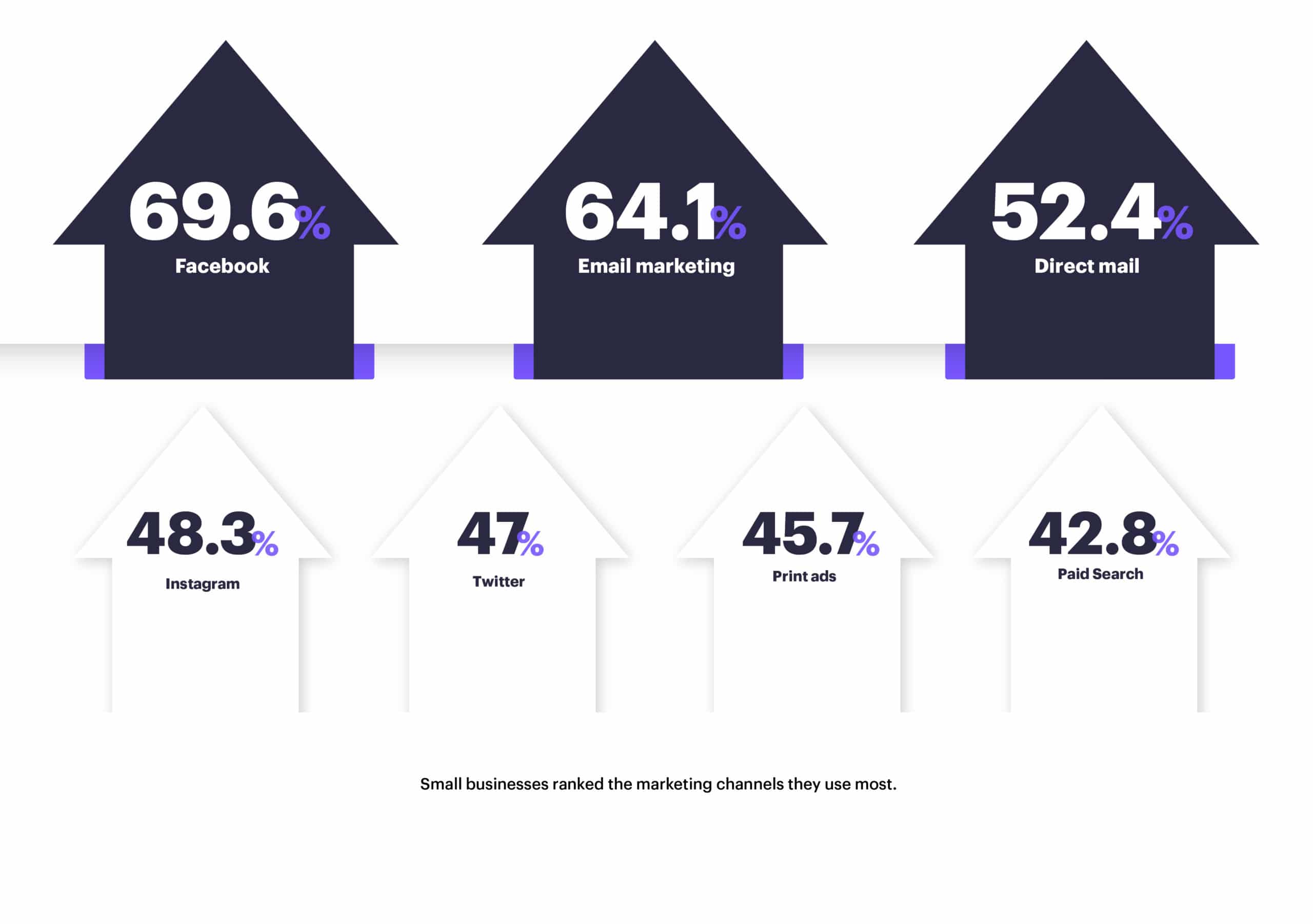
Facebook is used by nearly 69.6% of our respondents, and email marketing is used similarly by 64.1% of small businesses. Perhaps a little surprisingly, more small businesses use direct mail (52.4%) than Instagram (48.3%) or Twitter (47.0%).
Also coming in with less than half of the respondents is print ads with 45.7% and paid search with 42.8%.
They use these channels the least:
There’s a big drop-off between paid search and what comes next: Only 27.3% of small businesses we surveyed use Snapchat.
At less than a quarter of respondents, 24.5% use billboards or other out-of-home advertising. Another channel not being used by many small businesses is the music streaming space—advertising on platforms like Pandora or Spotify—with only 23.6% of respondents using those.
The least used channel is in a relatively new space. Only 18.8% of respondents say they use podcast programming and 18.5% use podcast advertising.
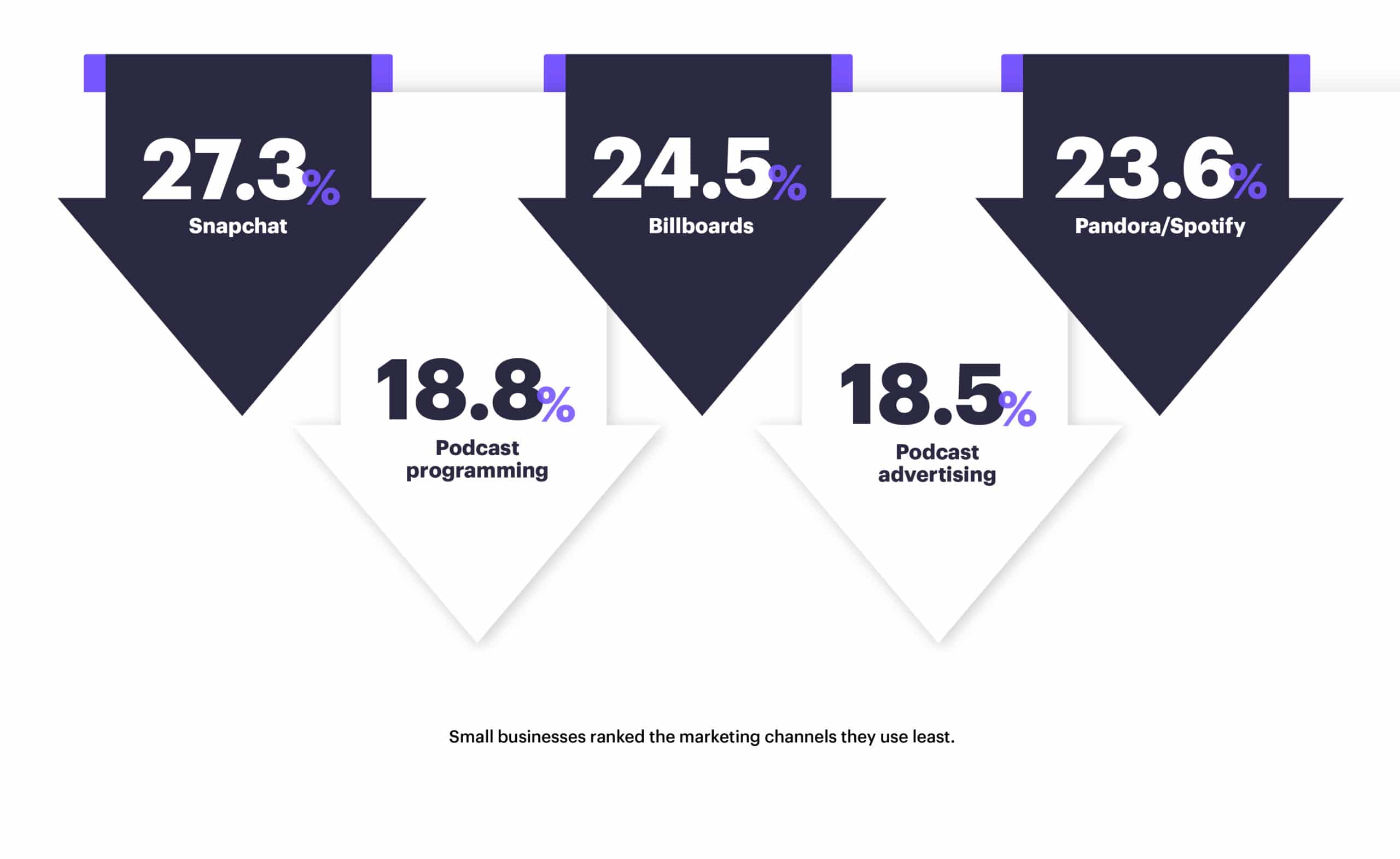
Ranked usage of marketing channels: Facebook (69.6%), email marketing (64.1%), direct mail (52.4%), Instagram (48.3%), Twitter (47%), print ads (45.7%), paid search (42.8%), Snapchat (27.3%), billboards or out of home advertising (24.5%), music streaming ads (23.6%), podcast programming (18.8%), podcast advertising (18.5%)
Small businesses ranked: Channels they find the most difficult to use
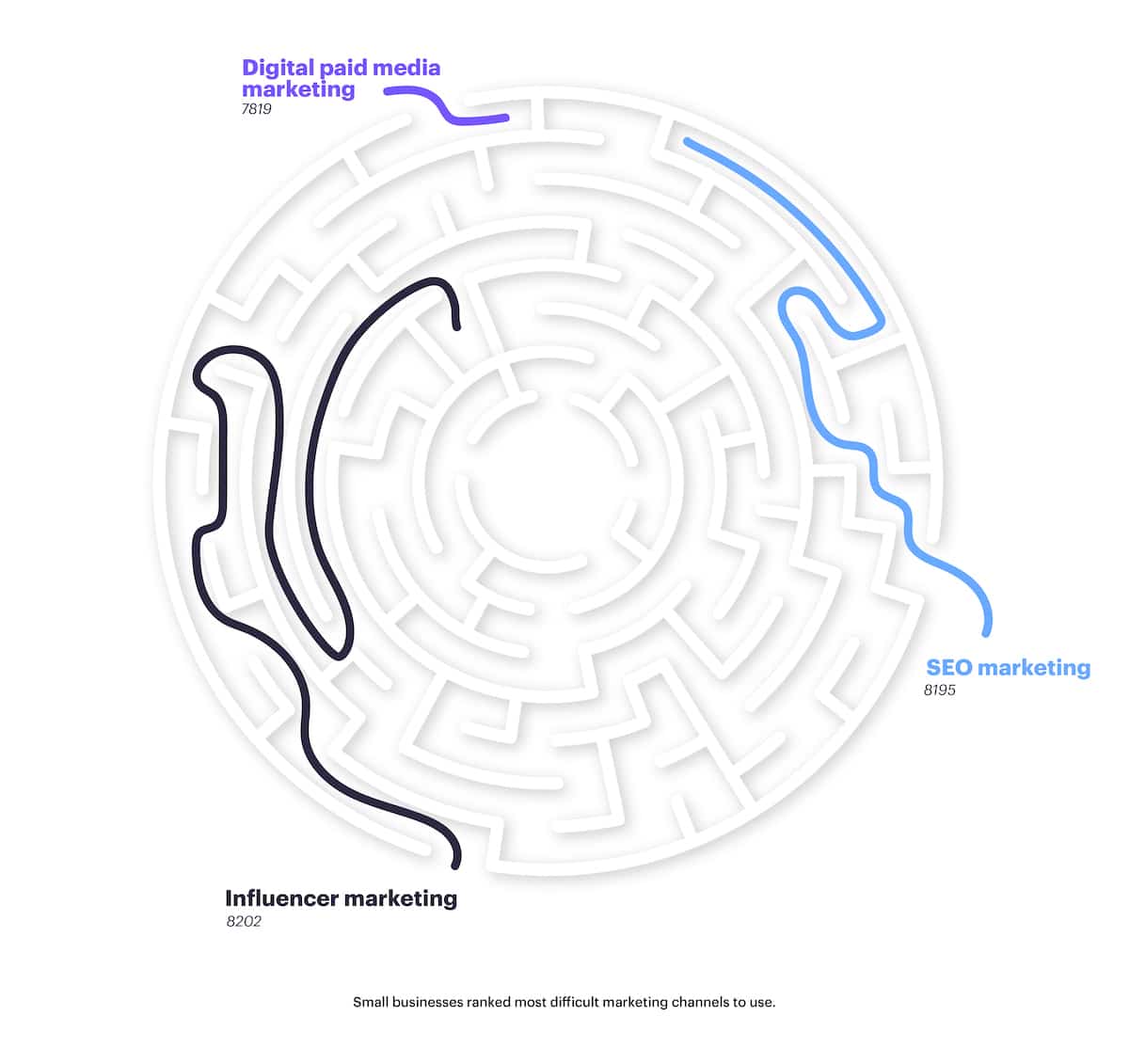
The most difficult channel for the majority of small businesses is influencer marketing, followed closely by SEO marketing, trailing by .08%—only 7 points. Digital paid media marketing fell at 4.5% behind SEO as the third most difficult channel to use.
Small businesses feel more comfortable with SMS marketing than traditional paid media marketing. Next comes content marketing, though they still find this channel more difficult to leverage than any of the social platforms.
Snapchat, trailing tightly behind content marketing, is the most difficult of the social media platforms for small businesses to use.
Coming in as the least difficult channels are Twitter, Instagram, direct mail, and other social media.
But the easiest marketing channels for small businesses are email marketing and, finally, Facebook.
Most difficult channels to use: influencer marketing (8202), SEO marketing (8195), digital paid media (7819), SMS marketing (7575), traditional paid media (7431), content marketing (7360), Snapchat (7259), Twitter (6957), Instagram (6829), direct mail (6825), social media (6744), email marketing (6603), Facebook (6477)
What channels do small businesses use for regular customer communications?
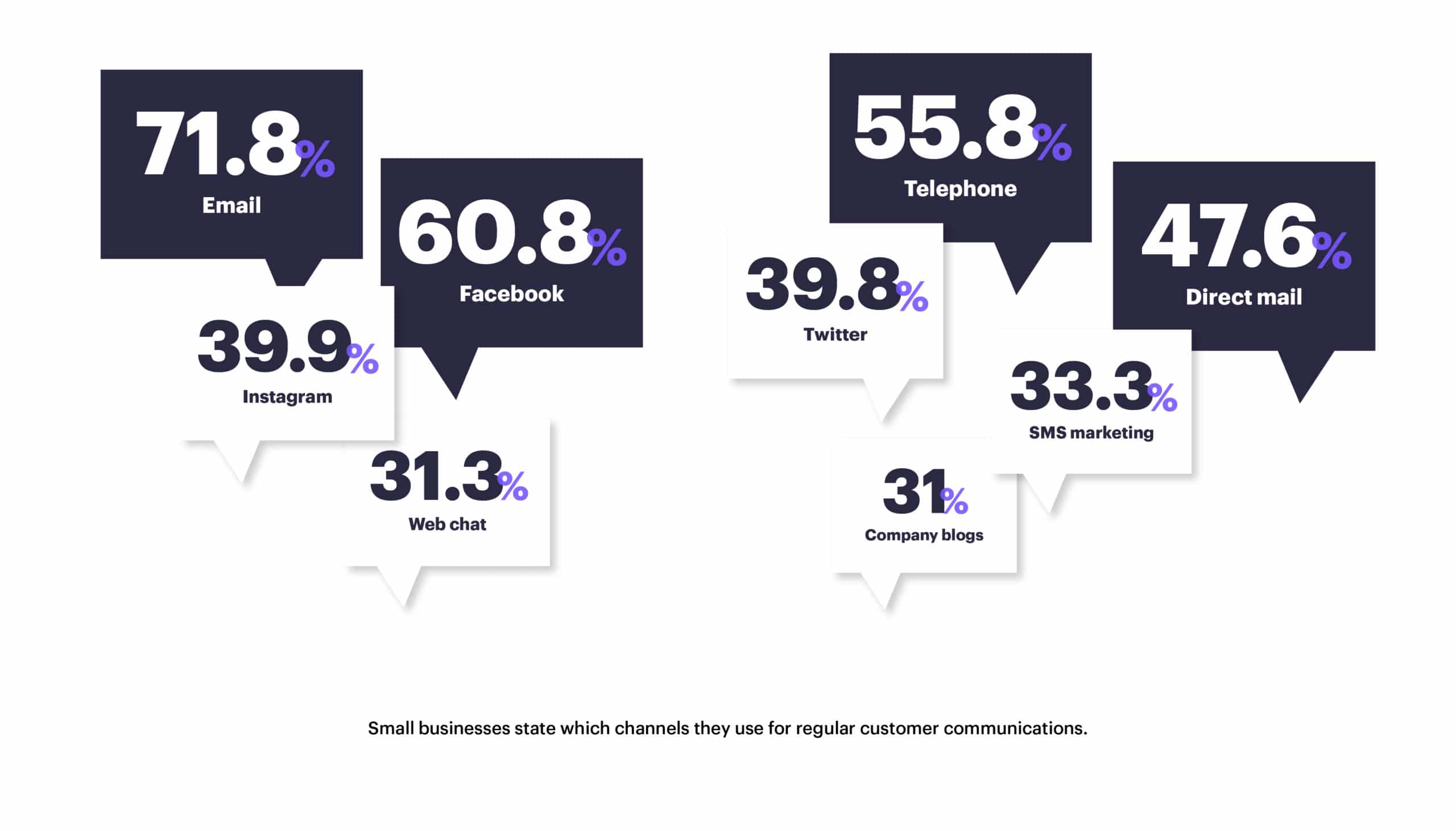
The majority of the small businesses we surveyed (71.8%) use email to communicate with their customers. Scoring beneath email, 60.8% of small businesses use Facebook for communication.
The only other channel that’s used by more than half of respondents (55.8%) is the phone. Meanwhile, 47.6% use direct mail to communicate with their customers.
Instagram and Twitter are used by nearly the same percentage: 39.9% and 39.8%, respectively.
SMS marketing is used to regularly communicate with customers by only 33.3% of our participants, while web chat is used by 31.3%. Company blogs are preferred by an even 31%.
Small businesses named one tactic that didn’t work for them over the past year.
A frequent answer we saw in our survey was that everything our respondents tried worked for them, which is impressive.
After that encouraging answer, the most frequent tactics we saw were social media, Facebook, podcasting, print ads, and mass mailings.
Here are some responses we saw (edited for length and clarity):
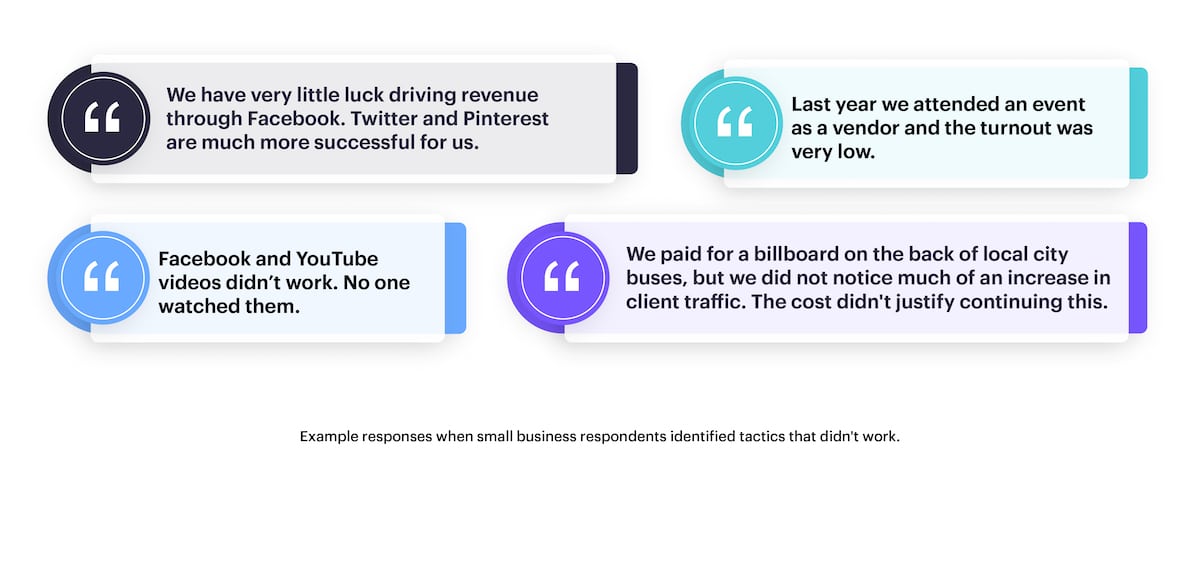
- “We have very little luck driving revenue through Facebook. Twitter and Pinterest are much more successful for us.”
- “We tried a mass mailing that really faltered.”
- “Last year, we attended an event as a vendor and the turnout was very low.”
- “SMS marketing”
- “We tried creating our own podcast and that was just a poorly thought-out idea.”
- “Facebook and YouTube videos didn’t work. No one watched them.”
- “Email marketing open rates were terrible.”
- “Facebook response was poor.”
- “Social media marketing”
- “Direct mail”
- “We paid for a billboard on the back of local city buses, but we did not notice much of an increase in client traffic. The cost didn’t justify continuing this.”
Takeaways: Choose strategies based on the ratio of efforts to results.
Remember, you don’t have to use any channel that’s not working for you. Only you know what resonates and brings in the best return for your specific niche and audience. There’s nothing that says you have to be on every social media platform or pursue every channel available to you. If influencer marketing works for you, great. If it doesn’t, don’t feel obligated to spend resources where you don’t see a return.
Instead, find what works.
The pros and cons of Facebook
Facebook turns out to be a bit controversial. While some small businesses see a great return, plenty of people said Facebook didn’t work for them. With Facebook’s many privacy and data issues and its increasing presence in the news cycle, it’s important you’re aware of the pros and cons that come along with marketing on Facebook.
Some things you should consider:
- Results on Facebook aren’t guaranteed.
- You won’t own your users’ data.
- You rely on a third-party platform that can go down or shut you out at any time.
- Only a small percentage of your Facebook followers will actually see your ads. You’ll often hear the phrase “pay to play” applied to Facebook, which means the results you’ll see will be directly correlated to the amount of money you spend.
Develop lifelong brand advocates through direct channels.
Developing brand ambassadors who will take on some of the marketing work for you and become some of your strongest allies out in the world is key to growing your business. Brand ambassadors tell their friends about you, share your posts and emails, and go out of their way to use your small business, no matter what competitors are also in the space.
But, based on the research, the majority of small businesses find influencer marketing to be the most challenging tactic. Luckily, influencers aren’t the only brand ambassadors you can utilize. In fact, a person doesn’t need to have a large following to be an advocate for your brand: Any customer who loves your brand, products, and what you stand for can be a brand ambassador.
The best way to create these advocates is by connecting with people on a personal level to ensure they feel strongly about their commitment to you, your products, and your small business’ mission.
To build brand advocates, you should:
- Utilize email to open a dialogue between you and your customers, followers, subscribers, etc.
- Respond directly to comments, likes, and shares on your social media profiles to keep your followers engaged.
- Emphasize your small business’ mission and how you are different from your competitors.
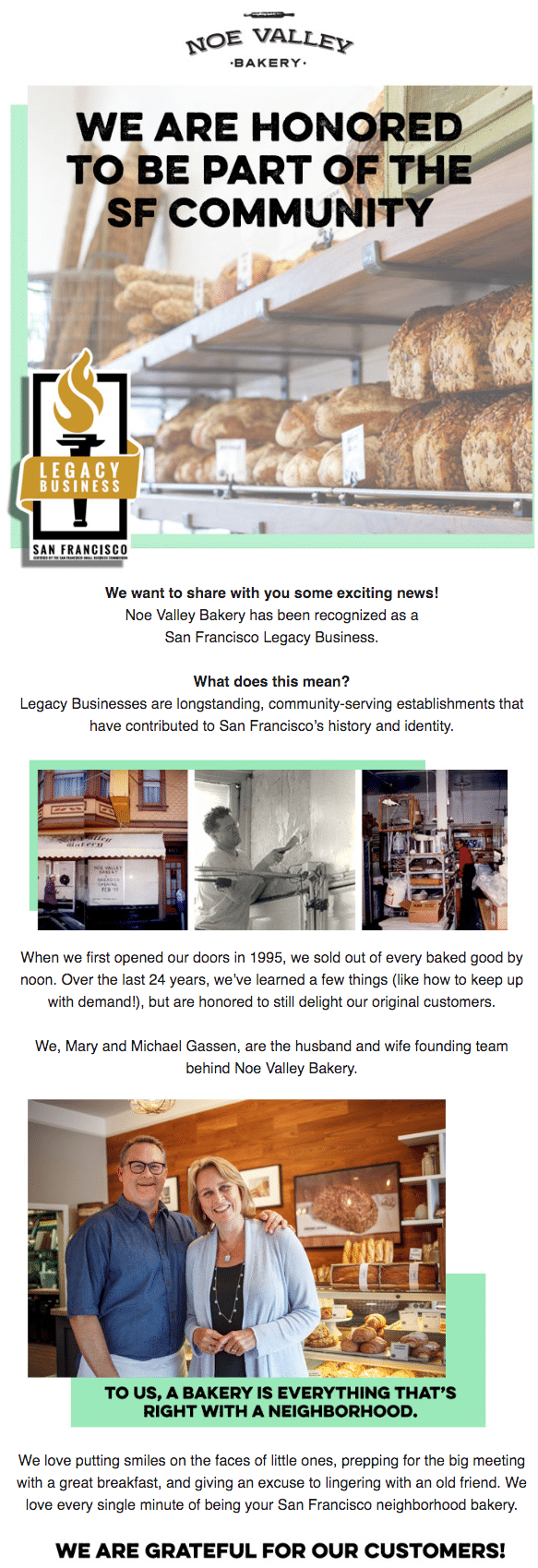
- Focus on storytelling across your email and social media channels to foster a strong connection with your audience. Notice how this email from small business, Noe Valley Bakery, tells the business’ story and makes a point to connect with the community.
- Create content that allows subscribers and followers to peek behind the curtain and get to know the people behind the brand.
- Share success stories, reviews, and feedback you get from customers or fans.
All of these tips focus on communicating directly with followers and emphasizing the human element of your small business to strike an emotional chord with your target audience.







![Toni Kroos là ai? [ sự thật về tiểu sử đầy đủ Toni Kroos ]](https://evbn.org/wp-content/uploads/New-Project-6635-1671934592.jpg)